Wear
Why a ribbed cuff stops standing up
The cushion under the heel usually stays intact long after the leg starts sliding down. Understanding how the elastic thread breaks down helps keep the ribbing firm against the calf across many shifts.
The part that gives out first
Most people expect a work sock to fail under the ball of the foot or behind the heel. Our terry cushion handles friction well, so the knit under the foot outlasts the elastic in the cuff and the arch band by a long margin. The core yarn remains dense, but the grip gives up.
When the top band loses tension, the sock slips into the boot shaft. A pair with plenty of terry padding still intact becomes frustrating to wear if the ribbing cannot stay planted on the leg throughout a long day on hard floors.
Heat breaks down the stretch
Spandex provides the snap in the ribbed cuff and the arch support. High heat is what degrades this elastic core quickest, making hot water and high dryer settings the main culprits. Heat bakes the stretch out of the thin rubberized strands until they snap or stay limp.
A tumble dryer on high heat is the fastest way to ruin a good cuff. Cool water washes and lower drying temperatures preserve the elastic structure far longer, keeping the ribbing tight around the calf without cooking the internal stretch yarns.
Bleach and improper storage habits
Chlorine bleach does double damage inside the knit. It attacks the spandex threads that hold the top up, and it also weakens the nylon yarn we blend through the toe and heel for structure. Bleached pairs lose their shape and wear through much sooner than unbleached ones.
Leaving socks stretched wide over a tall boot collar between shifts also ruins the memory of the cuff. Elastic needs to rest contracted. Storing them pulled tight over leather shafts leaves the rubber extended until the yarn forgets how to snap back to its original width.
What happens to taller pairs
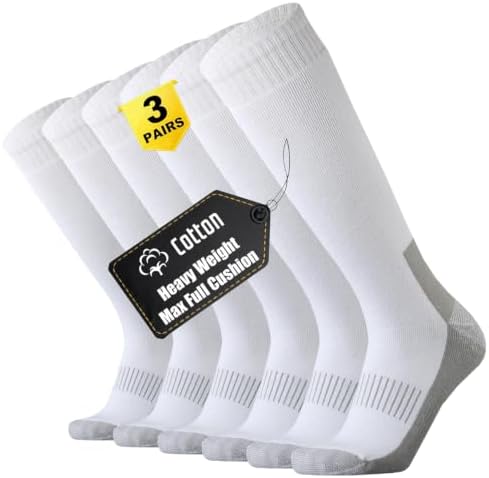
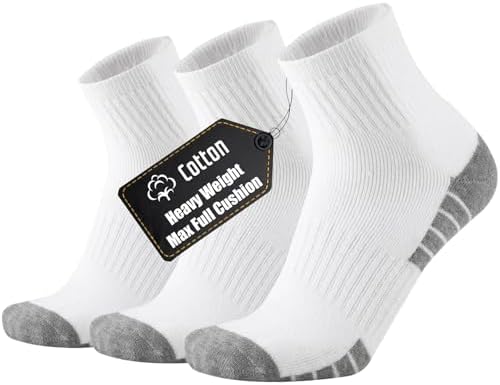
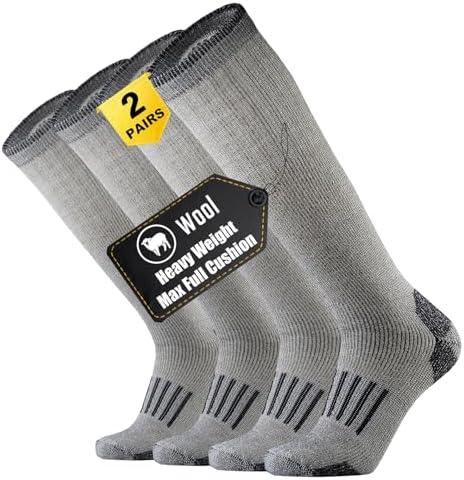
We rib the leg on all 3 heights, and the taller the leg the more the cuff has to hold. A low-cut quarter sock carries very little fabric weight, but a knee-high boot sock depends entirely on firm elastic tension to keep heavy terry from pooling around the ankles.
Once a ribbed cuff goes slack, it does not recover. You cannot shrink broken elastic back into shape with hot water, because more heat only finishes off whatever stretch remains. A sagging cuff marks the end of that pair for tall work boots.
Treating the elastic gently keeps the tall ribbing secure against the calf, letting the sock stay upright until the heavy terry cushion truly wears out.